
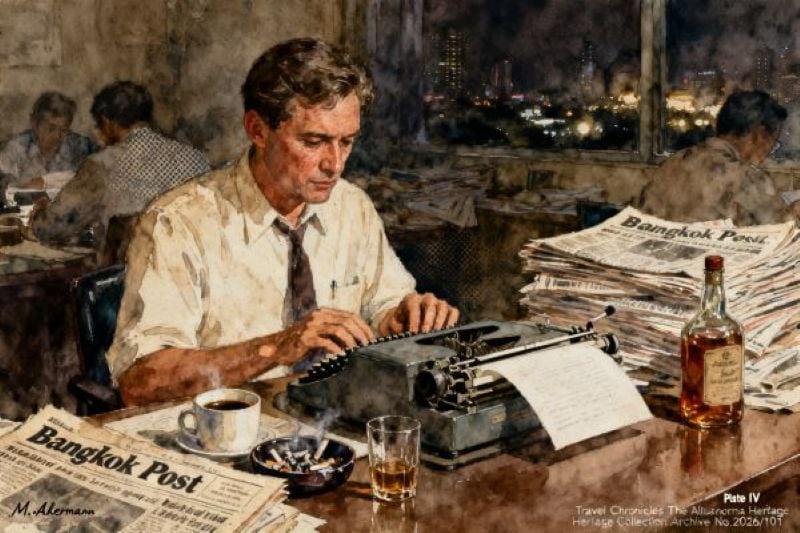
The One & Only Travel Chronicles: Vol. 1 Story of Bernard Trink:
The Nite Owl of Bangkok 1960s
Bangkok in the 1960s was a city of secrets. It was a city of shadows. It was a city of whispers. But one man dared to pull back the curtain. Bernard Trink. His column, “Nite Owl,” became legendary. It documented the city’s hidden nightlife. It chronicled the lives of American servicemen. It captured the essence of an era. Trink was not just a journalist. He was an anthropologist. He was a chronicler. He was the voice of Bangkok’s forbidden decade.
Furthermore, read our complet Bangkok guide here: The One & Only Guide to Bangkok’s Forbidden Wild 1960s
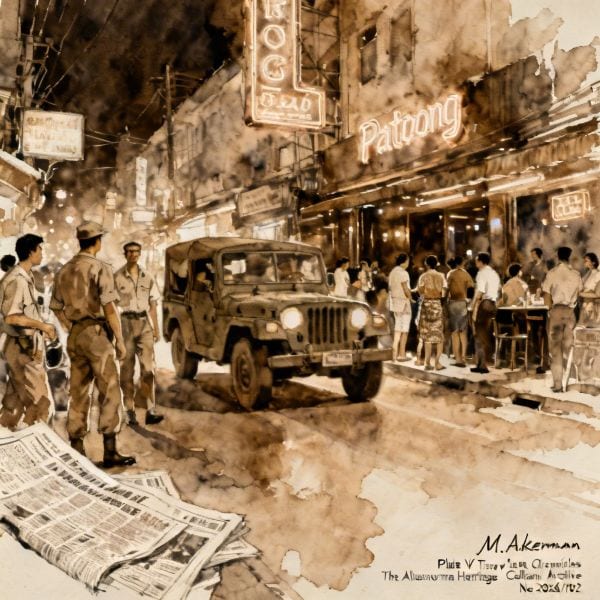
Bernard Trink: The Arrival of the Man Behind the Nite Owl
Bernard Trink arrived in Bangkok in 1966. He was an American from N.Y. He was a writer and journaist. Trink first came to Asia as a G.I. during the Korean War. He then worked as a journalist in India, Hong Kong, and Japan before coming to Bangkok. He was a keen observer. The city was already transforming. The Vietnam War was raging. American servicemen poured into Thailand. Bangkok became their R&R capital.
Trink saw it all. He saw the energy. He saw the chaos. He saw the opportunity. He started writing for the Bangkok World newspaper. His column, “Nite Owl” quickly gained a following.
It was unlike anything else. It was raw. It was honest. It was captivating. Originally, Trink’s “Nite Owl” was an informative three page illustrated section that appeared in the World every Friday afternoon. When the newspaper was bought out and shut down by the Bangkok Post in the mid-1980s, Trink’s column was shortened to just one page and the photographs were eliminated.
The Nite Owl’s Domain: Documenting the Forbidden
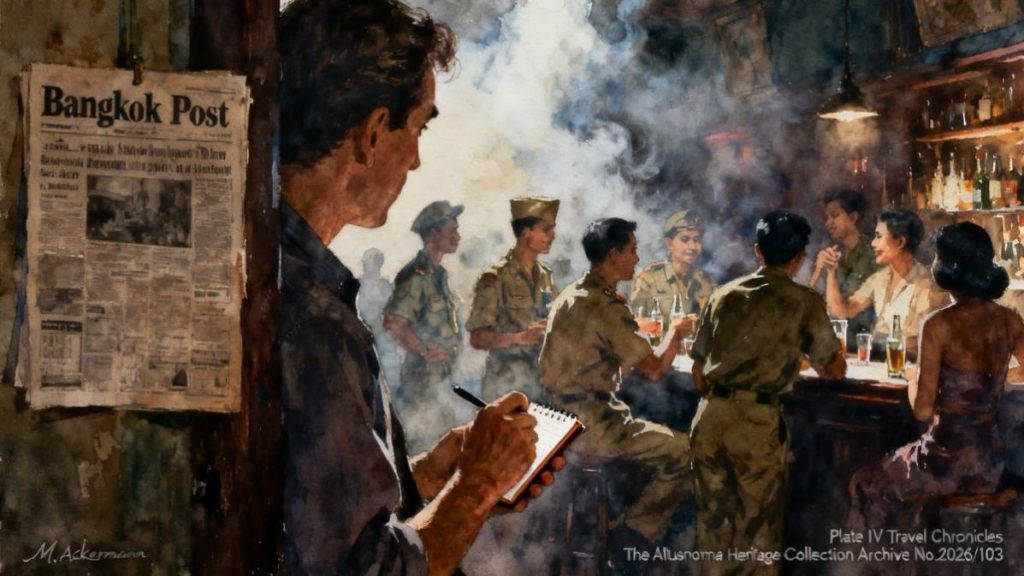
Trink’s column focused on Bangkok’s burgeoning nightlife. He wrote about the bars. He wrote about the clubs. He wrote about the go-go dancers. He wrote about the Patpong district. He wrote about the people. He wrote about the servicemen. He wrote about the locals. He wrote about the expatriates. He wrote about everyone. He did not judge. He observed. He reported. He painted a vivid picture of a city in flux. His words were short. His sentences were direct. His observations were sharp. He used transformation words. He used evocative language. He captured the mood. He captured the unique moments.
Furthermore, Trink became famous for his “Trinkisms” – a unique set of coded references and neologisms designed to circumvent the restrictions of family newspapers. Perhaps his most enduring coinage is “TIT” (This is Thailand), a phrase expats still use today to explain the baffling complexities of the country. These linguistic quirks allowed him to speak directly to his audience while maintaining a professional veneer.
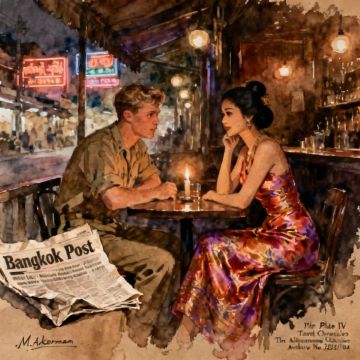
The Moral Compass and the Final Curtain
Despite his focus on the nightlife, Trink was often critical of the city’s seamier side. He frequently warned foreign men about the risks of the bar scene and spoke out passionately for women’s rights and against child prostitution. However, his career was not without controversy. His unorthodox beliefs regarding health issues brought considerable criticism and may have ultimately contributed to the end of his era.
In December 2003, after decades of being a Bangkok institution, Trink’s column was dropped without fanfare by a new editor. There was no farewell party and no grand announcement; the “Nite Owl” simply stopped being published. Although he continued to write occasional reviews, he remained largely retired, leaving behind a legacy that outlasted the very establishments he once chronicled.
The Legacy of the Nite Owl: Bernard Trink A Voice for an Era
Bernard Trink continued writing “Nite Owl” for many more decades. He became an institution in Bangkoks newspaper. He became a living legend. His column outlasted the Vietnam War. It outlasted the R&R boom. It outlasted many of the establishments he wrote about. But his words remain. They offer an invaluable historical record. They offer a unique perspective. They offer a glimpse into Bangkok’s 1960s forbidden past.
Trink’s legacy is immense. He gave a voice to the voiceless. He gave a face to the faceless. He documented a pivotal moment in Bangkok’s history. His work is a reminder. It is a testament. It is a guide. It helps us understand the city’s transformation. It helps us appreciate its complexity. It helps us remember the Nite Owl. It helps us remember Bernard Trink.
Where to Experience the Nite Owl’s Bangkok Today
While many of the original establishments are gone, the spirit of Trink’s Bangkok lives on. Visit Patpong. Explore the side streets. Imagine the neon lights. Imagine the music. Imagine the servicemen. The city has changed. It has evolved. But its history remains. Its stories endure. Bernard Trink ensured that. His Nite Owl column ensures that. It is a timeless record. It is a forbidden guide. It is a testament to an unforgettable era.
Continue Exploring
Discover more stories about Asian Heritage in our “The One & Only Guide” series, exploring more historical figures and events that shaped Asian mega Cities.
→ Bangkok’s Forbidden Wild 1960s
→ Hong Kong’s Forgotten 1950-1970
→ Jaipur: Epic Royal Heritage Secrets
Browse the Full Archive
Discover Bangkok’s Experiences Through Our Partner
For curated activities, cultural tours, and dining experiences in Bangkok, we recommend browsing through our trusted Asian travel partner. Discover heritage tours, traditional cooking classes, and premium dining reservations with exclusive rates.
Disclosure: This article contains affiliate links to select hotels and services. We earn a small commission if you book through our links, at no additional cost to you. All recommendations reflect our genuine expertise and research.
Comments
One response to “Bernard Trink: The Incredible Secrets of Bangkok’s Forbidden 1960s”
[…] Discover […]