
Die Goldene Zwanziger – Berlin’s 1920s
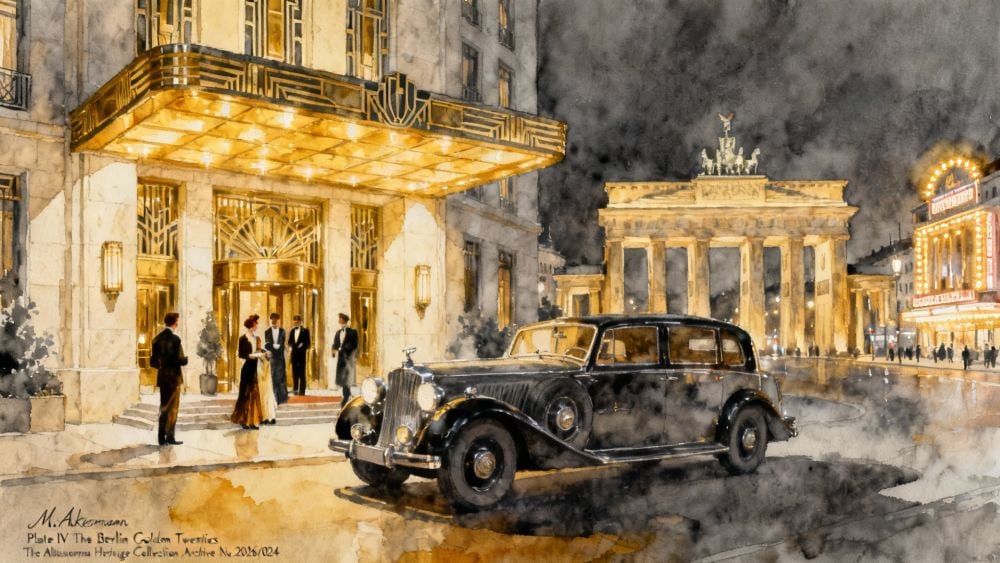
Berlin’s 1920s, known as Golden Twenties was more than a city; it was an explosion of avant-garde ambition, a living museum of the modern. For the heritage traveler, the Weimar Republic remains a seminal chapter in the archive of global history, a period when art, architecture, and social freedoms converged with an intensity that still echoes through the capital’s streets. To understand the luxury of today, one must first walk through the portals of Berlin’s Wild Age — a time when the city was the vibrant undisputed cultural capital of the world.
This was the era of the Neue Frau (New Woman), of intellectual giants like Albert Einstein and Bertolt Brecht, and of an untamed nightlife that scandalized and fascinated in equal measure. The arrival of the Charleston, the Shimmy, and the Black Bottom defined the era’s rhythmic landscape, injecting a new, kinetic energy into European ballrooms. Most notably, it was the arrival of the American entertainer Josephine Baker that catalysed this cultural shift, transforming the Charleston into a definitive symbol of Weimar-era liberation and avant-garde expression.
Today, Berlin does more than remember its past; the city actively curates and preserves its heritage, offering the discerning traveler a world ready for rediscovery.
Berlin’s Hotel Legacy: Sanctuaries of Splendor
During the Weimar Republic, Berlin’s grand hotels were the nerve centers of the city’s social and political life. They were more than mere accommodations; They stood as sovereign territories of luxury where diplomats brokered deals, artistic movements took root, and the world’s elite converged. Today, several of these institutions survive, offering a direct portal to the glamour of the Golden Twenties.
The Crown Jewel from Berlin’s: Hotel Adlon Kempinski
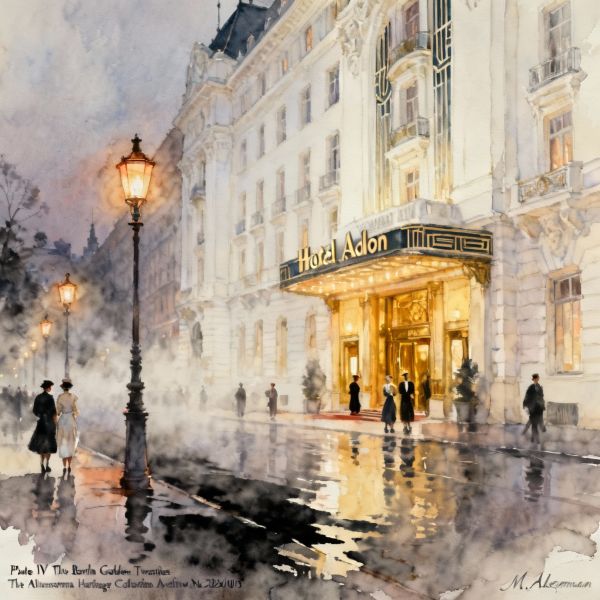
No exploration of 1920s Berlin is complete without the Hotel Adlon Kempinski. Lorenz Adlon opened the hotel in 1907 with the personal backing of Kaiser Wilhelm II, envisioning it as Germany’s answer to the grand hotels of Paris and London. Positioned majestically on Pariser Platz, with an unparalleled view of the Brandenburg Gate, the Adlon immediately became the city’s most prestigious address.
During the Golden Twenties, its guest list was a veritable Who’s Who of the era: Albert Einstein, Thomas Mann, and industrialists like Henry Ford and John D. Rockefeller held court in its opulent suites. Fans famously mobbed Charlie Chaplin at the hotel entrance, while Marlene Dietrich’s regular presence cemented the institution’s status as the epicenter of glamour.
Today’s Hotel Adlon Kempinski
Though the fires of 1945 tragically destroyed the original building, the Adlon rose again on its historic site in 1997, featuring a design that honored its predecessor. Since its rebirth, the hotel has reclaimed its role as Berlin’s grandest stage, hosting Queen Elizabeth II during her state visits and serving as the residence of choice for world leaders like Barack Obama. For the modern heritage traveler, a stay here transcends a mere reservation; it offers a direct entry into a living archive of global history. The grand lobby, with its iconic elephant fountain, provides a taste of the timeless luxury that once defined the Golden Twenties.
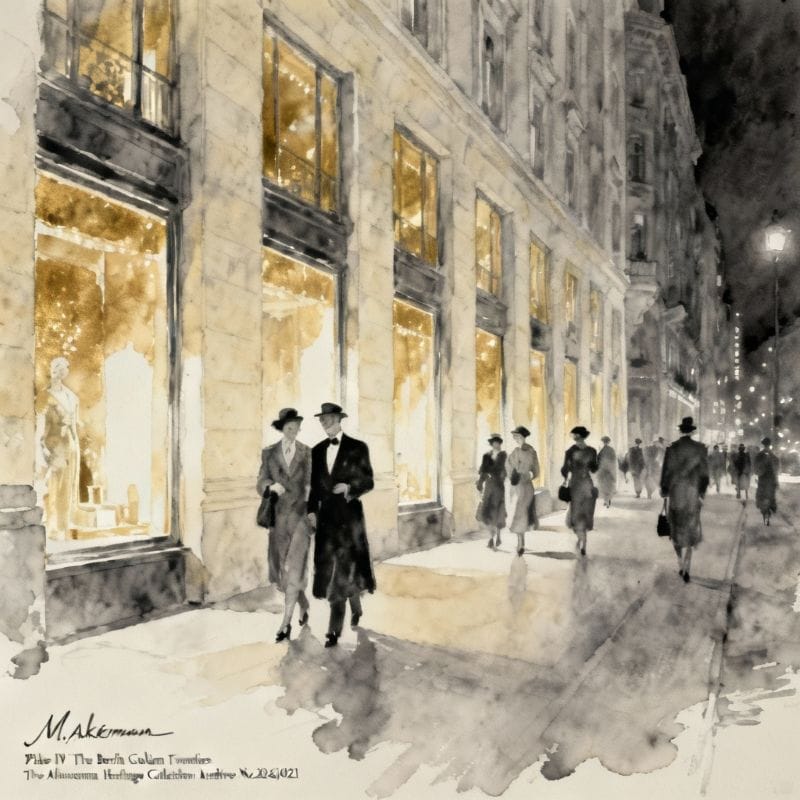
The Elegant Alternatives in Berlin’s Golden Twenties: Bristol, Savoy, and Steinplatz
While the Adlon dominated Unter den Linden, other historic hotels catered to the city’s discerning clientele. The original Hotel Bristol, also on Unter den Linden, was another titan of luxury, opened in 1891 and designed by the same architect as the Adlon, Gustav Georg Carl Gause.
It was a favorite of dignitaries and artists, including the novelist Vicki Baum, who worked there as a chambermaid to gather inspiration for her famous novel Grand Hotel. Though the original Bristol was destroyed in 1944, its name lives on in the Hotel Bristol Berlin on the Kurfürstendamm, a post-war icon that hosted John F. Kennedy.
For a more intimate, artistic atmosphere, the Hotel Savoy on Fasanenstrasse, opened in 1929, remains fully operational today as a haven for writers and film stars.
Its discreet charm and location near the vibrant Kurfürstendamm have made it a preferred retreat for over nine decades. The hotel retains its classic character, with its Weinrot restaurant continuing the tradition of refined dining that defined the era.
Another gem, the Hotel am Steinplatz, opened in 1913 in a stunning Art Nouveau building designed by August Endell . It quickly became a hub for Berlin’s literary and artistic elite, including Vladimir Nabokov. The hotel’s bohemian cellar bar, Volle Pulle, was legendary. After a meticulous restoration, it reopened in 2013. Being part of Marriotts Autograph Collection, its bar and restaurant once again a celebrated meeting point for Berliners and travelers alike.
Book Your Stay Through Our Partner
The hotel links throughout this guide direct you to official hotel websites for transparency and detailed information. However, we recommend booking through our trusted travel partner to secure the best rates on luxury accommodations. Browse the hotels featured above through our partner link for exclusive deals and seamless booking.
The Choreography of the Jazz Age: Josephine Baker & The Charleston
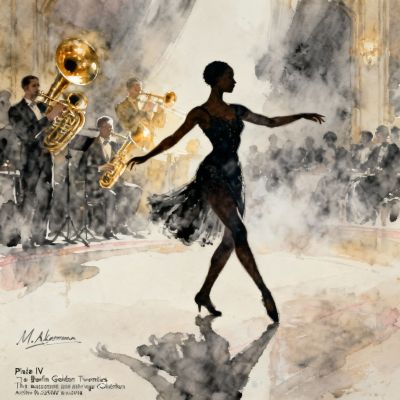
Berlin’s Golden Twenties Nightlife
No account of 1920s Berlin would be complete without acknowledging the seismic impact of its nightlife and the figures who defined it. The arrival of American entertainer Josephine Baker in 1926 was a cultural watershed. Her uninhibited performances of the Charleston at venues like the Nelson-Theater sent shockwaves through the city, her ‘danse sauvage’ becoming a symbol of the era’s ecstatic embrace of modernity and its rejection of bourgeois conventions .
The city’s dance halls and cabarets became laboratories for social and artistic experimentation. Places like the legendary Clärchens Ballhaus, which opened in 1905 and still operates today, were the vibrant heart of this new culture. In its Spiegelsaal (Mirror Hall), people from all walks of life mingled, danced, and experienced the intoxicating freedom of the Golden Twenties. The spirit of this era, a blend of glamour, rebellion, and artistic ferment, is still palpable in the city’s contemporary nightlife.
The Architecture of Modernity:
Bauhaus and Urban Reform
Berlin in the 1920s was a laboratory for new ideas in architecture. This was the era of the Bauhaus, the revolutionary school of art and design founded by Walter Gropius, which sought to unify art, craft, and technology. While the Bauhaus school itself was located in Weimar and later Dessau, its influence permeated Berlin. The city became a canvas for modernist architects who embraced new materials and a minimalist aesthetic, creating buildings that were both beautiful and functional.
The six Berlin Modernism Housing Estates, designated a UNESCO World Heritage site in 2008, offer a unique window into the progressive social and architectural ideals of the Weimar Republic. Leading architects including Bruno Taut, Martin Wagner, and Walter Gropius designed these estates to provide light, air, and green space for city dwellers.
The most famous is the Hufeisensiedlung (Horseshoe Estate) in Britz, designed by Bruno Taut, with its iconic horseshoe-shaped central building and colorful facades. These estates remain living residential areas, allowing the heritage traveler to experience the enduring legacy of Bauhaus-inspired design in a tangible way.
The Silver Screen and the Stage: Babelsberg and Brecht
Berlin’s groundbreaking contributions to film and theater cemented the city’s cultural dominance during the 1920s. Just outside the city, Filmstudio Babelsberg, the second-oldest major film studio in the world, became the birthplace of German Expressionist cinema. The studio hosted the production of masterpieces like Fritz Lang’s Metropolis and Josef von Sternberg’s The Blue Angel, the very film that launched Marlene Dietrich to international stardom. A visit to the studio’s grounds offers a glimpse into the creative engine that powered one of the most influential movements in cinematic history.
Meanwhile, the city’s stages were alight with radical new ideas. The Theater am Schiffbauerdamm made history in 1928 when it premiered Bertolt Brecht and Kurt Weill’s The Threepenny Opera. Its sharp social critique and unforgettable score, including the iconic “Mack the Knife,” captured the cynical, vibrant spirit of the age. Today, the theater is home to the renowned Berliner Ensemble, and seeing a performance there remains a direct connection to the city’s revolutionary theatrical past.
The Spectacle of Consumption:
Berlin’s Haus Vaterland
To truly understand the luxury and excess of 1920s Berlin, one must appreciate its culture of experiential consumption. The era was defined by an intoxicating blend of indulgence and entertainment, where the act of dining or shopping was transformed into a theatrical event.
The pinnacle of this culinary theater was the legendary Haus Vaterland, which opened in 1928 on Potsdamer Platz. Owned by the Kempinski family, this monumental entertainment palace featured thirteen themed restaurants, including a Viennese café, a Wild-West saloon, and the spectacular Rheinterrassen, which boasted a diorama of the Rhine river complete with an hourly pyrotechnic thunder-and-lightning storm. It was a marvel of modern efficiency and unbridled luxury, a symbol of the Golden Twenties’ commitment to transforming everyday experiences into moments of theatrical grandeur.
After sustaining damage during WWII, the building finally burnt out completely on 17 June 1953 during the East German uprising. Authorities then abandoned the site to ruin, simply walling up the windows to secure the remains. It was adjacent to the Berlin Wall after its construction in 1961.
Berlin’s KaDeWe
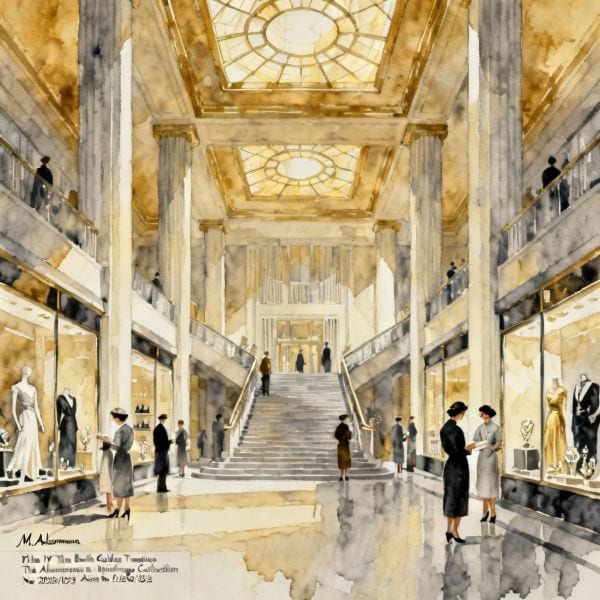
This same spirit of spectacle was evident in the world of retail at the Kaufhaus des Westens (KaDeWe). Opened in 1907, KaDeWe underwent significant expansion in the 1920s, becoming a symbol of opulence and modernity. Its grand facade, sophisticated interior, and pioneering use of escalators and elaborate window displays made it a premier shopping destination.
On the night of 28/29 January 1944, German Luftwaffe forces downed a Royal Air Force Halifax bomber, which crashed directly into the store. The impact killed the seven crew members, destroyed the upper levels, and ignited a fire that gutted the rest of the building.
The re-opening of the first two floors was celebrated in 1950’s and after several renovation, still remains open until today.
6th floor: food hall, famous for its wide variety of groceries, food and beverages since the 1920’s. It has around 110 cooks and 40 bakers and confectioners, supplying 35 gourmet counters and restaurants.
7th floor: (added in the early 1990s) includes a winter garden with a 1000-seat restaurant surrounded by an all-windowed wall offering a view over Wittenbergplatz.
The Modern Discovery: Experiencing the Golden Twenties
For the modern heritage traveler, the legacy of the Golden Twenties is not confined to museums and history books. It is a living presence that can be experienced throughout the city.
- Architectural Tours: Explore the UNESCO-listed Modernism Housing Estates or visit the Bauhaus Archive — currently operating from a temporary location during the renovation of its iconic building—to delve deeper into the movement’s history and influence.
- Historic Venues: Spend an evening at Clärchens Ballhaus to dance the tango or waltz in a truly authentic setting. Visit one of the city’s classic cocktail bars, like the Bar am Steinplatz, to sip a drink in an atmosphere steeped in history.
- Dining & Shopping: While Haus Vaterland is gone, the luxury of KaDeWe remains. A visit to its famous gourmet food hall is a must.
- Theater & Film: Attend a performance at the Berliner Ensemble or visit the Babylon Cinema, which still shows silent films with live organ accompaniment.
- Cabaret and Burlesque: Berlin’s thriving cabaret and burlesque scene offers a contemporary take on the decadent nightlife of the 1920s. Venues like the Tipi am Kanzleramt and the Bar jeder Vernunft present world-class entertainment in the spirit of Weimar-era Kabarett.
Experience Berlin Through Our Partner
The hotel links throughout this guide direct you to official hotel websites for transparency and detailed information. However, we recommend booking through our trusted travel partner to secure the best rates on luxury accommodations. Browse the hotels featured above through our partner link for exclusive deals and seamless booking.
The Legacy of the Wild Golden Twenties
Berlin’s Golden Twenties was a brilliant, fleeting moment – a crucible of modernity that redefined European culture. For the heritage traveler, the city offers a rare chance to engage with this history directly, from the grand corridors of its historic hotels to the avant-garde lines of its modernist estates.
To visit Berlin today is to see a city that has seamlessly integrated its past into a vibrant present. History here is not a static exhibit, but a living force. For those seeking the origins of modern luxury and artistic rebellion, Berlin stands as an indispensable destination — a curated collection of experiences that awaits rediscovery.
Disclosure: This article contains affiliate links to select hotels and services. We earn a small commission if you book through our links, at no additional cost to you. All recommendations reflect our genuine expertise and research.