
The One & Only Guide to Saigon: Hidden Secrets of Indochina
In the twilight of the French colonial era, Saigon was not merely a city in transition. Above all, it was a theater of international intrigue—a crossroads of empires and the epicenter of the First Indochina War.
Between 1954 and 1965, this vibrant metropolis witnessed the end of French rule and the steady escalation of American involvement. Beneath its elegant boulevards lay a far more complex reality – one shaped by espionage, political manoeuvring, and cultural transformation.
This guide explores the hidden secrets of Indochina during its most critical decade. For the contemporary traveler, the city offers a profound journey into history: walk the same streets where foreign correspondents chased stories, stay in the hotels where diplomats negotiated the region’s fate, and in addition, uncover the narratives that shaped modern Vietnam. Understanding this era is not only fascinating – it is essential for grasping the full depth of Southeast Asian heritage.
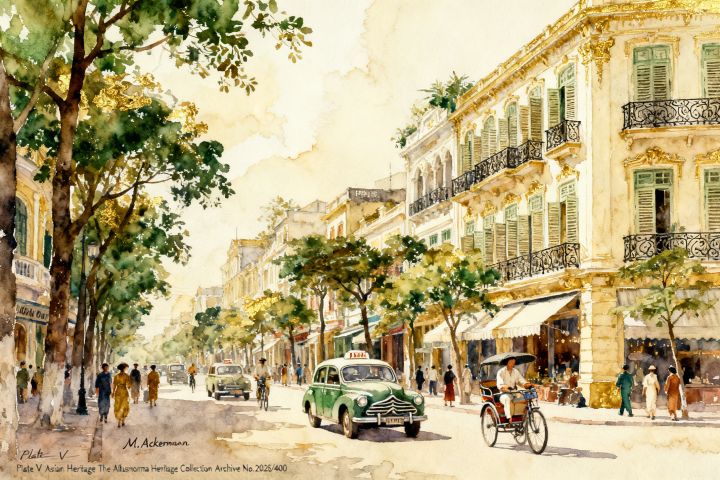
The period between the fall of Dien Bien Phu in 1954 and 1965 defined Saigon’s identity. As the capital of the Republic of Vietnam, it was a city of immense wealth and stark poverty, where sophisticated French culture coexisted with deeply rooted Vietnamese traditions. The streets carried the scent of strong coffee, echoed with Renault taxis, and pulsed with the tension of a divided nation.
For travelers today, exploring the city means looking beyond the modern skyline. Certainly, it requires uncovering the historical layers beneath the surface. By tracing the footsteps of writers and journalists, visitors connect with a past that remains vividly alive in the city’s architecture and enduring spirit.
The Literary Witness: Graham Greene and The Quiet American
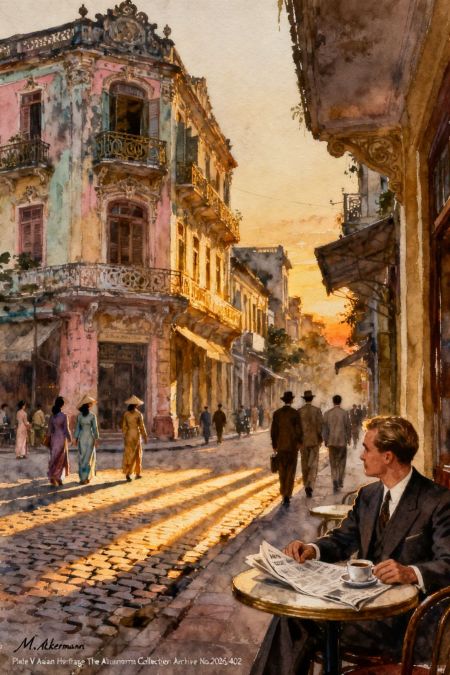
No writer captured the atmosphere of 1950s Saigon more acutely than Graham Greene. Especially between 1951 and 1955, the British novelist visited French Indochina three times. He immersed himself in the city’s complex political landscape. As a result, his experiences culminated in the novel The Quiet American. This prescient book explored the decline of European colonialism. Furthermore, it examined the dangerous innocence of early American intervention.
Greene understood that Saigon was a city of contradictions. On one hand, it offered the sophisticated comforts of French culture. On the other hand, the reality of the Indochina War was always present. It loomed just beyond the city limits. Through his protagonist, Thomas Fowler, Greene documented the cynicism of foreign correspondents. He also highlighted the tragic consequences of ignorant foreign policy.
Furthermore, Greene’s work remains a vital lens for understanding the era. When you read his descriptions of the city’s humid evenings, you are reading firsthand reportage. For this reason, tracing Greene’s footsteps through the city provides a profound connection. It offers travelers an unparalleled link to the past.
The novel’s exploration of the “Third Force” reflects the complex political calculations of the time. This was a theoretical alternative to both French colonialism and Vietnamese communism. Greene’s portrayal of Alden Pyle serves as a cautionary tale. Pyle’s naive belief in his ability to shape the destiny of Indochina leads to tragedy. This narrative arc chillingly foreshadowed the broader American experience in Vietnam.
For visitors today, The Quiet American serves as an essential guidebook. It illustrates the historical geography of Saigon. Greene’s detailed descriptions of specific locations allow travelers to connect fiction with reality. By reading the novel in the very places it describes, you bridge the gap. In fact, you can connect the 1950s with the present day.
The Caravelle Hotel: Epicenter of Foreign Correspondents
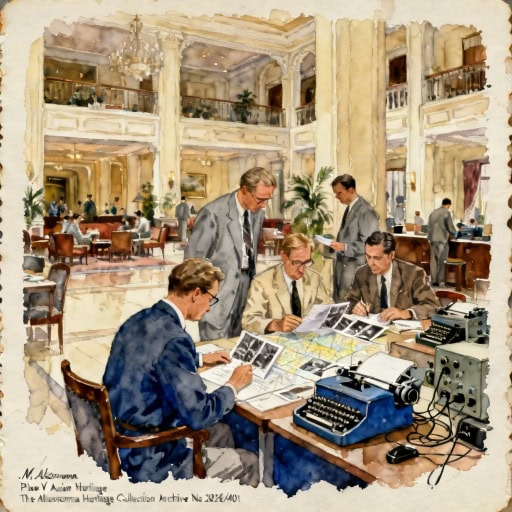
If Graham Greene defined the literary landscape, the Caravelle Hotel defined its journalistic center. Opened on Christmas Eve in 1959, the ten-story hotel immediately became prestigious. Designed by Vietnamese architect Nguyễn Văn Hòa, it featured Italian marble. Moreover, it boasted bullet-proof glass and a state-of-the-art air-conditioning system. A private generator powered these modern amenities.
However, the Caravelle’s true significance lay in its clientele. During the 1960s, the hotel served as the operational hub for the international press. The Saigon bureaus of NBC, ABC, and CBS all operated from its rooms. Journalists, diplomats, and military officers gathered at the Saigon Saigon Rooftop Bar. They exchanged information, debated strategy, and observed the distant flashes of artillery fire.
Nevertheless, the hotel was not immune to the conflict it observed. In August 1964, a bomb exploded in room 514. It damaged several rooms on a floor occupied primarily by foreign journalists. Despite the danger, the Caravelle remained the undisputed center of foreign media and foreign observers.
The Caravelle also played a role in the political developments of the era. In 1960, prominent Vietnamese politicians held a press conference at the hotel. They issued the “Caravelle Manifesto.” This document criticized the government and also called for political reforms. The event demonstrated the hotel’s status as a relatively safe space. However, many of the manifesto’s signatories were subsequently arrested.
SaigonSaigon Rooftop Bar a legacy
During the later years of the war, the Caravelle continued to serve as a vantage point. The rooftop bar was the tallest point in the city at the time. It offered journalists an unobstructed view of the surrounding countryside. From this elevated position, correspondents could watch the war unfold in real-time. They sipped drinks while observing the tracer fire that lit up the night sky.
Today, the original rooftop bar remains largely unchanged. Way before sky bars, craft beer and social media became ‘things’, drinks flowed uninterrupted at Saigon Saigon Rooftop Bar from the very first moment the hotel opened way back in 1959. It offers visitors the chance to stand exactly where history was recorded. In addition to overlook the city and along with one of its most famous and historical streets.
The Darker Heritage: Espionage and Political Complexity
The period between 1954 and 1965 was defined by intense political instability. Following the French defeat at Dien Bien Phu in 1954, the Geneva Accords divided Vietnam. Saigon became the capital of the newly formed Republic of Vietnam. Consequently, the city became a magnet for intelligence agencies. Political factions and military advisors also flooded the capital.
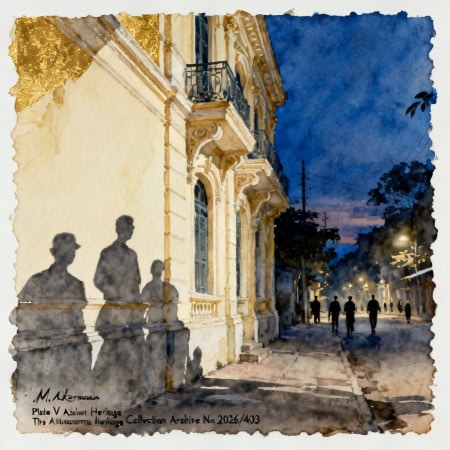
Espionage was a daily reality. The cafes along the Rue Catinat were notorious meeting places for informants. Different factions, including the Viet Minh, vied for influence. Foreign intelligence services also operated in the chaotic political vacuum. This darker heritage of intrigue defined the city’s atmosphere during these critical years. The history of Indochina during this era is not a simple narrative. Instead, it is a story of competing ideologies and desperate survival. It involves the tragic consequences of international power struggles. By understanding this context, visitors can appreciate the profound resilience of the Vietnamese people.
The Binh Xuyen exemplifies the convoluted power dynamics of the 1950s. This was a powerful organized crime syndicate that controlled the city’s police force. The struggle for control culminated in the Battle of Saigon in 1955. This violent conflict left parts of the city in ruins. The battle marked a decisive turning point, consolidating Diem’s power. It ended the era of warlord control in the capital.
The CIA also maintained a significant presence in the city during this period. Operating from various safe houses, American intelligence officers sought to prop up the government. They aimed to counter the influence of communist insurgents. The covert operations conducted by these agencies added another layer of complexity. For exaple, they involved sabotage, propaganda, and political manipulation.
Historical Sites and Landmarks of the Era
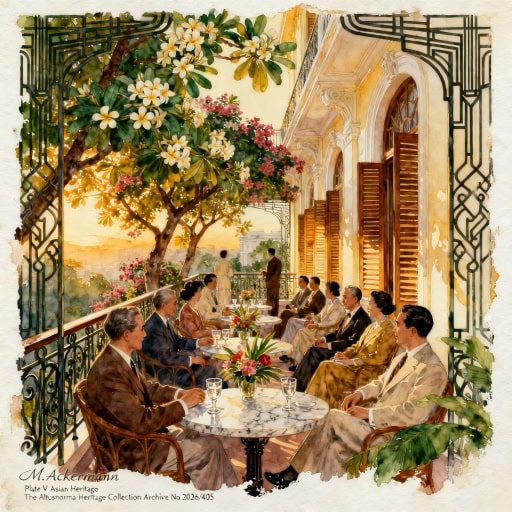
To truly understand the Saigon of 1954-1965, you must explore its surviving historical landmarks. The Hotel Continental Saigon, built in 1880, served as Graham Greene’s residence. As a result, it features prominently in his novel. Its open-air terrace was the premier gathering spot for the city’s elite. This was true before the Caravelle’s opening.
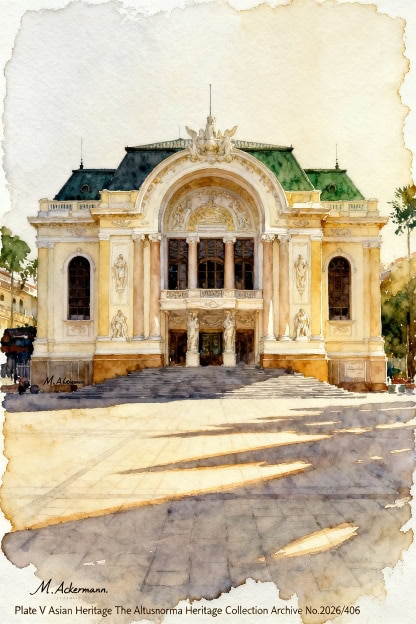
Additionally, the Saigon Opera House stands as a magnificent example of French Colonial architecture. It is located directly across from the Caravelle. During the 1950s, it also served as the Lower House assembly of the State of Vietnam. Moreover, the surrounding Lam Son Square was the heart of the city’s political life.
Finally, the historic Post Office remains a stunning testament to the era’s architectural ambitions. It was designed by Gustave Eiffel. Walking between these sites along Dong Khoi Street allows you to trace the physical geography. You can map the city’s most turbulent decade. These landmarks are not merely beautiful buildings to illustrate the time. They are also the stages upon which the drama of Indochina unfolded.
The Independence Palace also played a central role in the history of the era. The original Norodom Palace served as the residence of the French Governor-General. Later, it housed the President of South Vietnam. In 1962, two dissident Vietnamese Air Force pilots bombed the palace. The extensive damage prompted Diem to order the demolition of the old palace. Later, a new modernist structure was constructed on the same site.
A Hidden Layer of Saigon: The Muslim Community
Saigon Central Mosque provides a fascinating glimpse into the city’s diverse cultural fabric. Built in the 1930s by South Indian Muslims, it is also located near the historic center. The mosque served as a spiritual center for the city’s Muslim community. This community included merchants, traders, and immigrants from across Asia. Specifically, the presence of such diverse religious institutions highlights the cosmopolitan nature of the metropolis.
The End of an Era: The Transition to War
As the 1960s progressed, the character of Saigon began to change fundamentally. The sophisticated atmosphere of the late French colonial period gradually gave way. Consequently, it was replaced by the harsh realities of full-scale US American military involvement. The arrival of ground troops in 1965 marked the definitive end of the era. This was the era described by Graham Greene.
The city’s infrastructure strained under the massive influx of soldiers and contractors. In addition, refugees also flooded the capital. The elegant boulevards became congested with military vehicles. The local economy was profoundly distorted by foreign currency. However, the architectural legacy of the 1954-1965 period remained deeply embedded. The complex cultural synthesis also endured in the city’s identity.
Understanding this transition is essential for comprehending modern Ho Chi Minh City. The rapid changes of the mid-1960s accelerated the city’s modernization. But they also created a deep sense of loss. The cosmopolitan, multifaceted society had briefly flourished in the aftermath of French rule. In fact, this society was forever altered by the escalation of the conflict.
The assassination of President Ngo Dinh Diem in November 1963 marked a critical turning point. The coup removed a deeply unpopular leader. On the otherhand, it also plunged the country into a prolonged period of political instability. The ensuing series of short-lived military governments further weakened the South Vietnamese state. This set the stage for the massive escalation of the conflict.
The Gulf of Tonkin incident in August 1964 provided the justification for direct intervention. Following reports of attacks on U.S. naval vessels, the U.S. Congress passed a resolution. This authorized President Lyndon B. Johnson to use military force in Vietnam. This decision fundamentally altered the trajectory of the war and the fate of Saigon. It transformed the city from a regional capital into a command center.
The Legacy of French Colonial Architecture
The architectural heritage of Saigon is inextricably linked to the French colonial period. From the late 19th century until 1954, French architects transformed the city. They earned it the nickname “Paris of the East.” They designed broad, tree-lined boulevards and elegant public buildings. Luxurious private villas reflected the grandeur of the French Empire.
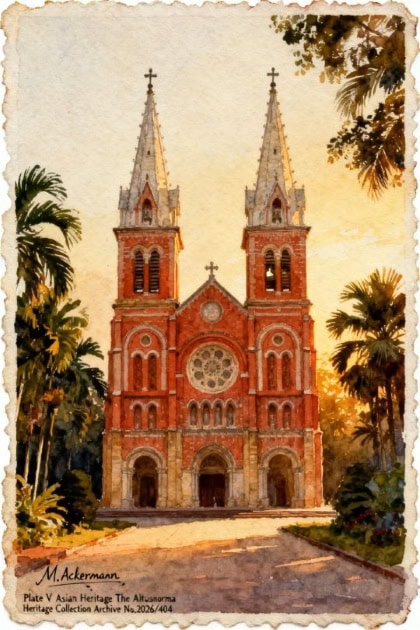
The Notre-Dame Cathedral Basilica of Saigon is perhaps the most iconic example. Constructed between 1863 and 1880, it stands as a monument to enduring influence. It was built entirely with materials imported from France, including red bricks from Toulouse. Its twin bell towers dominate the city’s skyline. They serve as a prominent landmark for visitors.
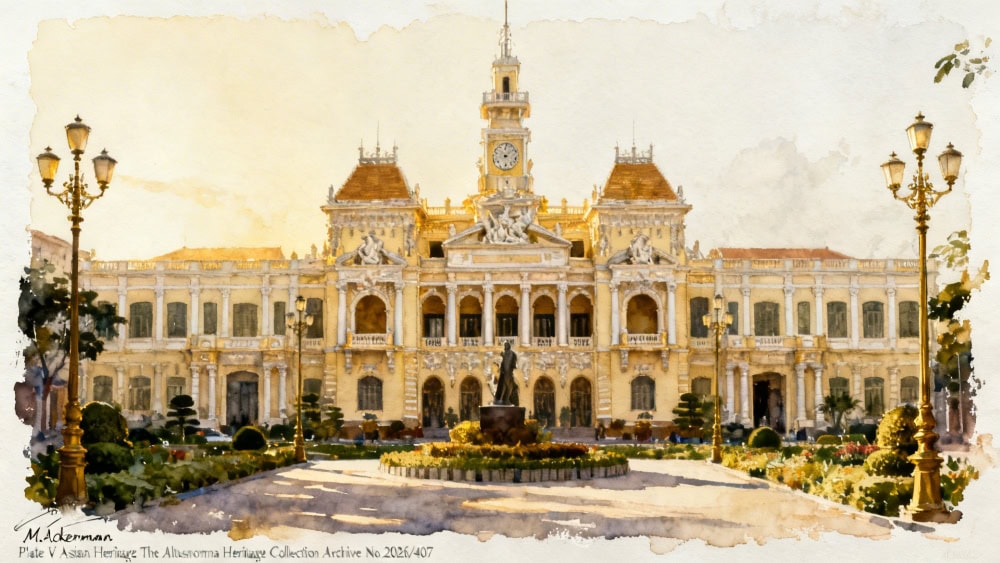
The Saigon City Hall is another magnificent example of colonial architecture. Designed by French architect Paul Gardès and completed in 1909, it features an ornate facade. Classical columns, intricate sculptures, and a central clock tower reflect opulent style. Today, the building serves as the headquarters of the Ho Chi Minh City People’s Committee. It remains one of the city’s most photographed landmarks.
The preservation of these colonial structures has been a complex issue for modern Vietnam. Following the end of the war in 1975, many buildings were repurposed. Some were allowed to fall into disrepair. However, in recent years, there has been a growing recognition of their historical value. Efforts to restore and protect these architectural treasures, in fact, have become a priority. This ensures that the legacy of French Indochina remains visible.
For travelers, exploring the colonial architecture of Saigon offers a tangible connection. Walking through the city’s historic districts, you can observe intricate details. You can see French design, from wrought-iron balconies to louvered windows. These architectural elements provide aesthetic pleasure. They also serve as physical reminders of the cultural synthesis that defined the city.
The Role of the CIA in 1950s Saigon
The involvement of the Central Intelligence Agency in Saigon during the 1950s is fascinating. It is an often controversial chapter in the city’s history. As the French colonial administration withdrew, the United States sought to fill the power vacuum. They aimed to prevent the spread of communism in Southeast Asia. Above all, the CIA played a central role in this effort. They conducted covert operations and provided support to the newly established government.
The CIA’s presence in Saigon extended beyond individual operatives. The agency established a vast network of safe houses and listening posts. They also created front organizations throughout the city. These covert facilities served as bases for intelligence gathering. They supported paramilitary operations and the recruitment of local informants. The sheer scale of the CIA’s activities highlights the strategic importance of the city.
A legend arrives
One of the most prominent figures in this covert war was Edward Lansdale. He was a legendary CIA operative who arrived in Saigon in 1954. Lansdale was tasked with organizing resistance to the Viet Minh. He aimed to strengthen the position of President Ngo Dinh Diem. Lansdale’s operations included psychological warfare, sabotage, and political manipulation. These activities became the stuff of legend and significantly influenced American policy.
Lansdale’s activities in Saigon have often been cited as inspiration for Alden Pyle. This is the character in Graham Greene’s The Quiet American. Although Greene denied that Pyle was based directly on Lansdale, the similarities are striking. Both men shared a naive belief in the power of American ideals. They also shared a willingness to employ ruthless tactics to achieve their objectives.
For travelers interested in the history of espionage, Saigon offers numerous sites. While many specific locations remain classified, the general atmosphere of intrigue is palpable. Exploring these areas provides a fascinating glimpse into the hidden history of Indochina. It allows visitors to connect with the clandestine struggles that shaped the region.
The Cultural Synthesis of Saigon
The period between 1954 and 1965 was characterized by a unique cultural synthesis. The city’s population was a diverse mix of Vietnamese and French expatriates. Besides Chinese merchants, a growing number of American advisors also lived there. This demographic diversity, in fact, created a vibrant and cosmopolitan society. As a result, it blended Eastern traditions with Western influences in very unique ways.
The Art of Living: Era of Art, Entertaiment and Style
The culinary scene in Saigon during this era reflected this cultural synthesis perfectly. French cafes and bistros coexisted with traditional Vietnamese street food stalls. They offered a diverse array of flavors and culinary experiences. The famous bánh mì for example, perfectly encapsulates this culinary fusion. It is a Vietnamese sandwich made with a French baguette and local ingredients. Indeed, the vibrant food culture of 1950s Saigon continues to influence the city today.
The arts and entertainment scene in Saigon also flourished during this period. The city boasted numerous cinemas, theaters, and nightclubs. These venues catered to a diverse audience with varied tastes. French chanson, American jazz, and traditional Vietnamese music could all be heard. This vibrant cultural life provided a stark contrast to the political instability. Nevertheless, it offered an escape from the violence that often dominated the headlines.
The fashion of 1950s Saigon further illustrated the city’s cultural synthesis. The elegant áo dài, the traditional Vietnamese tunic, was often paired with Western accessories. This created a distinctive and sophisticated style that was unique to the city. The city’s tailors and dressmakers were renowned for their skill and creativity. They catered to both the local elite and the growing expatriate community. The fashion of the era reflected the city’s status as a cosmopolitan hub.
For travelers, experiencing the cultural synthesis of Saigon involves exploring diverse neighbourhoods. From the bustling markets of Cholon to the elegant boutiques of Dong Khoi Street. The legacy of the 1950s and 1960s is still present in the city’s vibrant cultural life. By engaging with this diverse heritage, visitors can gain a deeper understanding. They can appreciate the complex and fascinating history of Indochina.
Where Luxury Meets History: Staying in Saigon
Park Hyatt Saigon
Park Hyatt Saigon offers an exquisite blend of contemporary luxury and historical elegance. Located directly behind the Opera House on Lam Son Square, this magnificent hotel provides 245 rooms. These include 23 luxurious suites that cater to discerning guests. While the current building is modern, its architecture pays homage to the French Colonial style. This style defined the city’s golden age and continues to inspire its aesthetic. The interior design features polished wood, elegant artwork, and also sophisticated Vietnamese accents.
Furthermore, guests can enjoy authentic Italian cuisine at Opera, or experience the sophisticated ambiance of Square One. In addition, the hotel’s location places you at the epicentre of Saigon’s heritage district. You are steps away from the Caravelle and the Continental. Therefore, the Park Hyatt represents the pinnacle of luxury for travelers seeking to explore. It allows you to delve into the city’s rich history without sacrificing modern comfort.
Caravelle Saigon
Caravelle Saigon is not just a hotel; certainly it is a historical monument. Opened on Christmas Eve 1959, it was the city’s tallest building. In fact, it was also the absolute centre of international media during the Vietnam War. Today, the hotel retains its iconic status while offering 335 meticulously appointed rooms. The original ten-story structure has been integrated with a modern 24-story tower. This expansion provides breath-taking views of the city skyline and the Saigon River.
The true highlight for travelers is the Saigon Saigon Rooftop Bar. This legendary venue remains largely unchanged from the 1960s, when war correspondents gathered. They came to exchange information and watch the distant conflict unfold. Staying at the Caravelle allows you to inhabit the very spaces where the history of Indochina was written. It was debated by the world’s most famous journalists in this exact location.
Hotel Majestic Saigon
Built in 1925 by wealthy Chinese-Vietnamese businessman Hui Bon Hoa, Hotel Majestic Saigon is a masterpiece. It is a stunning example of French Colonial architecture that has stood the test of time. Overlooking the Saigon River, the hotel has hosted royalty, authors, and international dignitaries. Its stained-glass windows, sweeping staircases, and classical columns transport guests back to an elegant era. This era defined the 1920s and 1930s in Indochina.
The Majestic offers an unparalleled sense of historical authenticity. During World War II, it was occupied by the Japanese Imperial Army. Later, it served as a prominent gathering place during the First Indochina War. The rooftop M Bar provides panoramic views of the river, making it an ideal location. It is perfect for reflecting on the city’s complex and enduring heritage.
Renaissance Riverside Hotel Saigon
Renaissance Saigon offers a distinct perspective on the city’s evolving identity. Situated along the banks of the Saigon River, this luxury property combines modern design. It pairs this with exceptional service to create a memorable experience. The hotel features 336 spacious rooms and suites, many offering stunning river views. While it does not possess the colonial history of the Majestic or the Continental, its location is prime. It provides excellent access to the city’s historic core.
Guests can relax at the rooftop pool or enjoy diverse dining options. These include authentic Vietnamese cuisine that showcases local flavors. The Renaissance represents the modern, dynamic spirit of Ho Chi Minh City. It provides a luxurious base from which to explore the historical narratives of the 1950s. In addition, it also connects visitors to the transformative events of the 1960s.
Sofitel Saigon Plaza
Sofitel Saigon Plaza brings French art de vivre to the heart of the city’s diplomatic quarter. Located on the historic tree-lined Le Duan Boulevard, the hotel is situated near former embassy sites. These numerous foreign embassies played crucial roles during the 1960s. The property features 286 elegant rooms and suites, designed with a sophisticated blend. This blend seamlessly integrates French and Vietnamese aesthetics.
The hotel’s renowned restaurants, including the acclaimed Mezz, offer exceptional culinary experiences. The Sofitel’s commitment to luxury and its strategic location make it an outstanding choice. It is ideal for heritage travelers seeking to understand the diplomatic and political geography. It perfectly situates guests within the context of the Indochina era.
Book Your Stay Through Our Partner
Explore luxury hotels in Saigon through our trusted travel partner. Secure exclusive rates on heritage properties and colonial palaces. Book now for your unforgettable Indochina experience.
Disclosure: This article contains affiliate links to select hotels and services. We earn a small commission if you book through our links, at no additional cost to you. All recommendations reflect our genuine expertise and research.
Mid-Range Heritage Hotels in Saigon
Hotel Continental Saigon — Built in 1880, this iconic hotel was Graham Greene’s residence. It also features prominently in The Quiet American, making it a popular literary landmark. It offers authentic colonial charm and an unbeatable location on Dong Khoi Street.
Liberty Central Saigon Citypoint — A modern, comfortable option located in District 1. It provides excellent value and also easy walking access to all major historical sites. Guests can easily explore museums and cultural attractions from this central base.
Grand Hotel Saigon — Established in 1930, this historic property offers classic French Colonial architecture. It features elegant rooms and in addition a central location near the Saigon River. This makes it a perfect starting point for historical exploration.
Rex Hotel Saigon — Dating back to 1927, the Rex gained fame during the Vietnam War. It served as the site of the daily military press briefings. These were also known cynically by journalists as the “Five O’Clock Follies.”
Continue Exploring
Read more stories about Asian Heritage in our “The One & Only Guide” series, in addition discover more historical figures and events that shaped Asian mega Cities.
→ Hong Kong’s Forgotten 1950-1970
→ Bangkok’s Forbidden Wild 1960s
Browse the Full Archive
Comments
2 responses to “The One & Only Guide to Saigon: Hidden Secrets of Indochina”
[…] → Saigon: Hidden Secrets of Indochina […]
[…] → Saigon: Hidden Secrets of Indochina […]